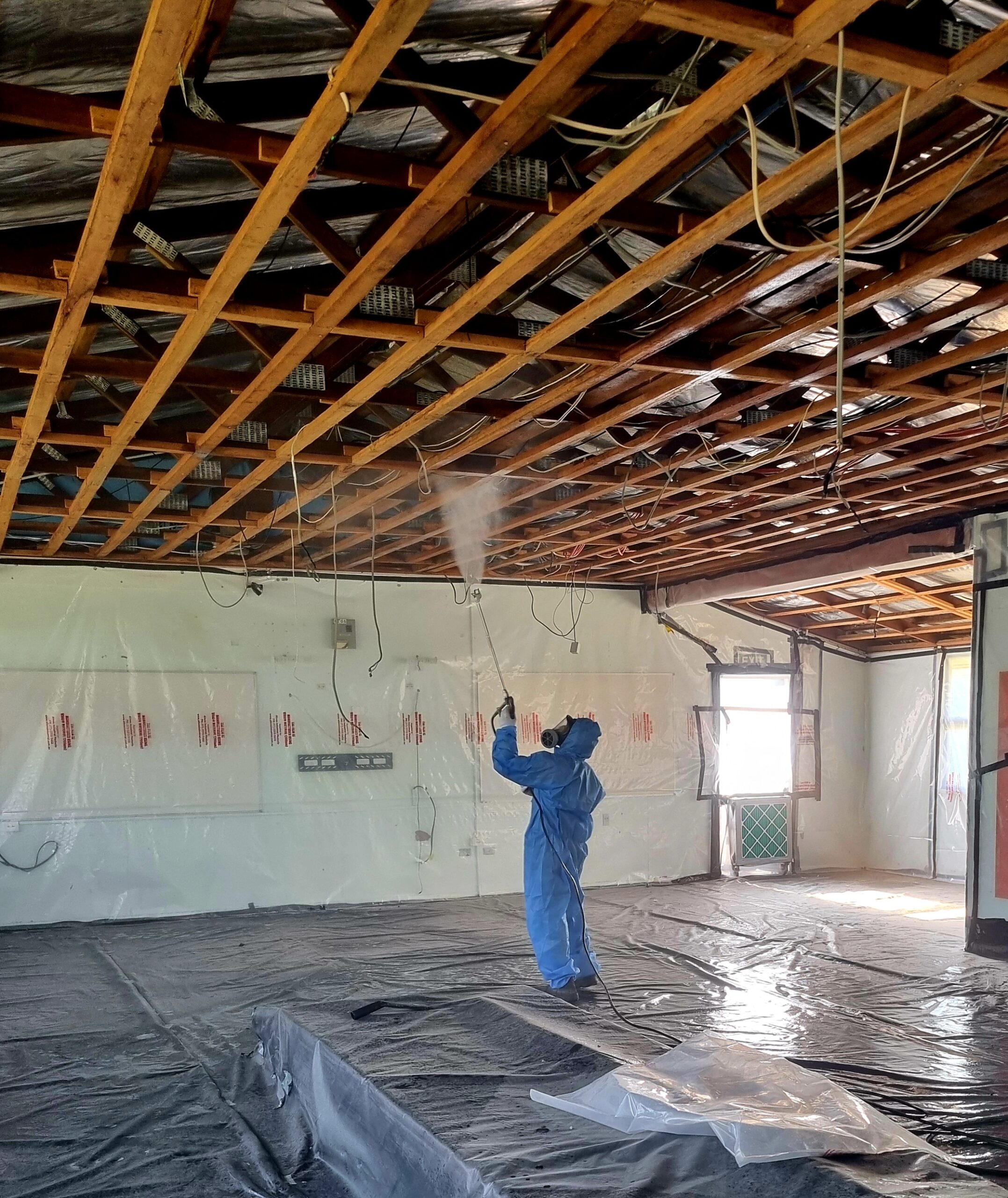
Asbestos air monitoring (also referred to as asbestos monitoring or air quality monitoring) is the structured process of measuring whether asbestos fibres are present in the air at a site.
This is particularly important during asbestos removal work, demolition, remediation, and any activity likely to generate airborne asbestos fibres – including excavation or handling asbestos-containing materials.
Air monitoring helps determine:
It is an essential part of managing asbestos risk – especially where there is friable asbestos, loose asbestos, or a higher likelihood of fibre release.
When asbestos has been present for a long time – in buildings, materials, or even asbestos-contaminated soil – fibres can spread beyond the original source. This can increase risk for people on site, nearby properties, and the surrounding environment, particularly when material is disturbed.
There is no safe level of asbestos exposure. Inhaled fibres are associated with serious occupational lung diseases, including lung cancer. That’s why monitoring air quality is not just a technical detail – it’s a direct safeguard for workers, occupants, and the public.
Builders, property owners, and site managers have a responsibility to manage safety risks under safety legislation and relevant environmental legislation. Air quality monitoring provides evidence that control measures are working and that risks are being minimised.
In many projects, air monitoring is tied to the clearance process and reporting. It supports documented proof that a site has been managed correctly – which matters for insurers, builders, commercial clients, and anyone who needs defensible project records.

Not every job is the same. Some works require a higher level of monitoring, especially where the risk of airborne fibres is increased.
Asbestos air testing may be recommended:
For projects involving asbestos-contaminated land, contaminated soil, or soil surface disturbance, air monitoring is often a sensible control measure – especially if works may disturb fragments or fibres in the ground.

HMG is an A-Class asbestos removal and demolition specialist with multiple crews servicing South East Queensland. We work with clients across residential, commercial, and industrial sites where asbestos risks need to be managed carefully and efficiently.
On active sites, asbestos risk can change quickly depending on:
Air monitoring supports safe handling and a controlled approach. It helps determine whether additional control measures are needed and provides confidence that the process is being executed properly.
While the exact process depends on site conditions and the monitoring plan, asbestos air monitoring typically follows a structured approach.
Monitoring is most effective when it is planned, not reactive. A suitable monitoring plan considers:
In many cases, this is developed and carried out by occupational hygienists or a licensed asbestos assessor acting as a competent person.
Air sampling equipment is placed in strategic locations to capture airborne fibres in and around the work area. Sampling may be conducted:
This step forms the basis of asbestos air testing.
The collected samples are analysed, and results are interpreted to determine whether asbestos fibres are present at elevated levels and whether control measures are effective.
Results are documented, and practical recommendations are provided for what happens next: continue work, adjust controls, extend containment, repeat monitoring, or proceed to clearance steps.
For many clients – especially builders, insurers, and commercial stakeholders – documentation is the difference between “maybe it’s safe?” and “we can prove it’s safe.”
Air monitoring can support:
Where applicable, this may link into clearance certificates issued by the appropriately qualified party. (Requirements vary depending on the nature of the asbestos removal work and site conditions.)
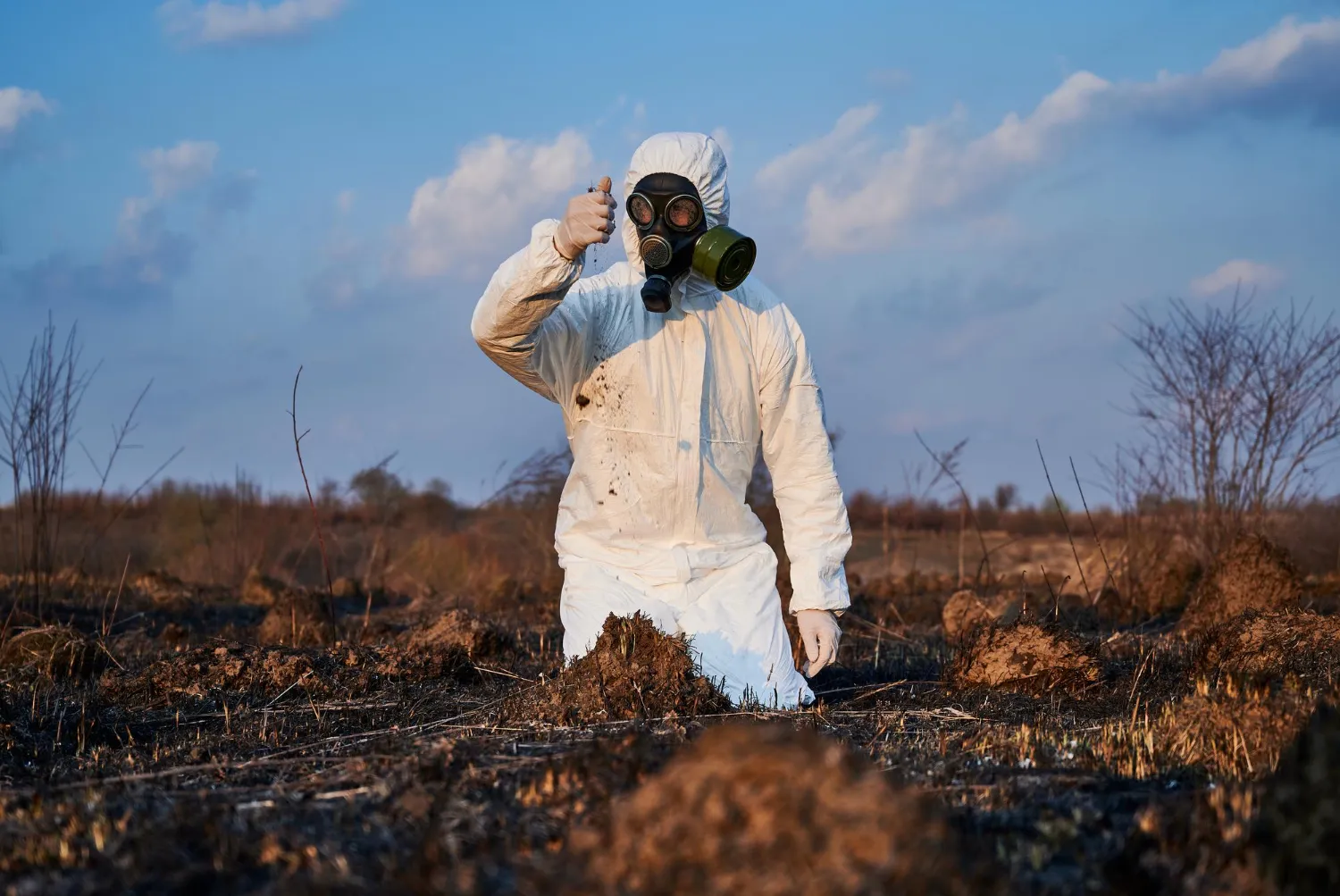
Air monitoring is not only relevant to building removal. It’s also important for contaminated land and soil remediation, particularly where the risk of fibre release increases once the ground is disturbed.
If asbestos-contaminated soil is present, fibres and fragments may be spread through:
During remediation, excavation, and removal, disturbed contaminated soil can release airborne asbestos fibres – particularly if the material has deteriorated to a friable-like condition.
Where soil contamination is confirmed, air monitoring can help minimise risk and support responsible remediation.
HM Group also supports broader remediation works, including asbestos-contaminated soil removal and, where required, asbestos-contaminated soil removal strategies to safely remove asbestos-contaminated soil and manage asbestos waste and disposal.
Friable vs non-friable asbestos – why it changes the air monitoring approach
Understanding asbestos type helps determine the monitoring needs.
Friable asbestos can be crumbled or reduced to powder by hand pressure. It is higher risk because it can release fibres more easily, increasing the likelihood of airborne asbestos.
Non-friable asbestos is bonded in a solid matrix (such as cement sheeting). It generally releases fewer fibres when intact, but can still become hazardous if broken, cut, degraded, or disturbed.
Both types can pose risks. The difference is how easily fibres can become airborne – and therefore how important monitoring and controls become.
This service is commonly used by:
Whether you’re removing asbestos, managing an unexpected discovery, or planning works on an older site, asbestos monitoring helps you manage risk responsibly and avoid costly delays.
HMG is known across Brisbane and South East Queensland for safe, compliant, practical project delivery.
We give straightforward advice and clear updates. If you’re unsure what you’re dealing with, we help you understand the safest way forward.
We are A-Class asbestos removal licence holders and fully insured. We prioritise public health and worker safety – we do not cut corners to make a job cheaper, faster, or easier.
With multiple crews and subcontractors, we can support projects across SEQ – residential, commercial, and industrial – including demolition and remediation works.
Our experience means we can deliver cost-saving options while maintaining strong safety controls and meeting regulatory requirements.
If you’re planning asbestos removal, demolition, or soil remediation – or you’ve uncovered suspicious materials – early advice matters.
We can help you:
Contact us to discuss asbestos air monitoring in Brisbane and South East Queensland.