Key takeaways
- Asbestos is still present in many buildings built before 2003, and it often can’t be identified without professional testing.
- The real danger begins when asbestos is disturbed, releasing fibres that can cause serious long-term health issues.
- DIY asbestos removal puts you, others, and the property at risk, both from a health and legal perspective.
- Licensed asbestos removalists follow strict processes, equipment, and regulations to safely remove and dispose of hazardous materials.
- Proper asbestos removal protects your health, reduces liability, and helps maintain the value and safety of your property.
Understanding asbestos removal work and why it needs to be left to the professionals
In 1880, asbestos was first discovered in Australia. Since then, it was used in almost every facet of industrial and domestic product manufacturing.
Asbestos was hailed as a miracle material. Its heat resistance, durability, and affordability made it a go-to choice in construction. From building sheeting, roofing, pipes, toasters to colouring pencils, car and motorbike brakes, gaskets and window putty, insulation to floor tiles.
But by the late 20th century, the truth came out: asbestos is a silent killer. When disturbed, asbestos fibres can become airborne, lodging deep in the lung’s alveoli and leading to serious health issues like mesothelioma, lung cancer, and asbestosis. If you’re dealing with an older building — whether it’s your home, office, or rental property — understanding asbestos and how to remove it properly is critical. Here’s why it matters and how to handle it safely. g asbestos and safe removal is critical. Here’s why it matters and how to handle it safely.
Why is asbestos still a problem?
Asbestos manufacturing was only stopped in 1989 when the Australian government passed legislation that prevented the manufacture of any products containing asbestos, due in part to the James Hardie industry lawsuits. A total ban on asbestos product sales came into effect in 2003.
Even though asbestos use has been heavily regulated or banned in many countries since the 1980s, it’s still waiting in millions of structures built before then. Homes, schools, and commercial buildings from the mid-20th century often contain asbestos in places like roofing, pipe insulation, drywall, and even textured ceilings. The material itself isn’t dangerous when left undisturbed, but renovations, demolitions, or natural wear can release those deadly fibres into the air. That’s where the risk begins—and why removal is often necessary.
The challenge? You can’t always spot asbestos with the naked eye. It’s not like mould or a leaky pipe that announces itself. Professional testing is usually the only way to confirm its presence, which is why suspecting asbestos in a property older than 2003 should trigger immediate action.
The very real dangers of DIY asbestos removal
It’s tempting to think you can save a few dollars by taking on asbestos removal yourself. After all, how hard could it be to rip out some old bathroom or flooring? We’ve all seen it done on The Block. The answer: extremely hard and dangerous.
Disturbing asbestos without proper precautions releases clouds of microscopic asbestos dust, putting you, your family, your tenants, and future buyers of the property at serious risk. Beyond the health hazards, improper removal can also lead to legal trouble. The liability for asbestos-related diseases continues for decades after your actions — asbestos-related diseases often have a long latency period, meaning symptoms may not appear for decades after exposure. This is why the statute of limitations usually starts from the date of diagnosis, not the exposure date.
Australia and Queensland have strict laws about how asbestos removal work must be handled, and failing to comply can mean hefty fines or lawsuits.
Licensed professionals are trained to manage the process safely. They use specialised equipment, including HEPA vacuum cleaners, negative air pressure systems and enclosures, and full personal protective clothing to contain and eliminate the threat. They also know how to dispose of asbestos waste properly — it is highly illegal to place asbestos in your general waste bin, as it is classified as hazardous material. In Queensland, the fine for illegally disposing of asbestos can exceed $50,000, plus decontamination and remediation costs.
Step-by-step: What happens during professional removal
If you’ve confirmed asbestos on your property, the next step is to hire a licensed and insured company. Here’s what you can expect:
Step 1: Assessment and planning
The team starts with a thorough inspection to identify all asbestos-containing materials (ACMs). They’ll develop a removal plan tailored to your building, factoring in safety and local regulations.
Step 2: Sealing the area
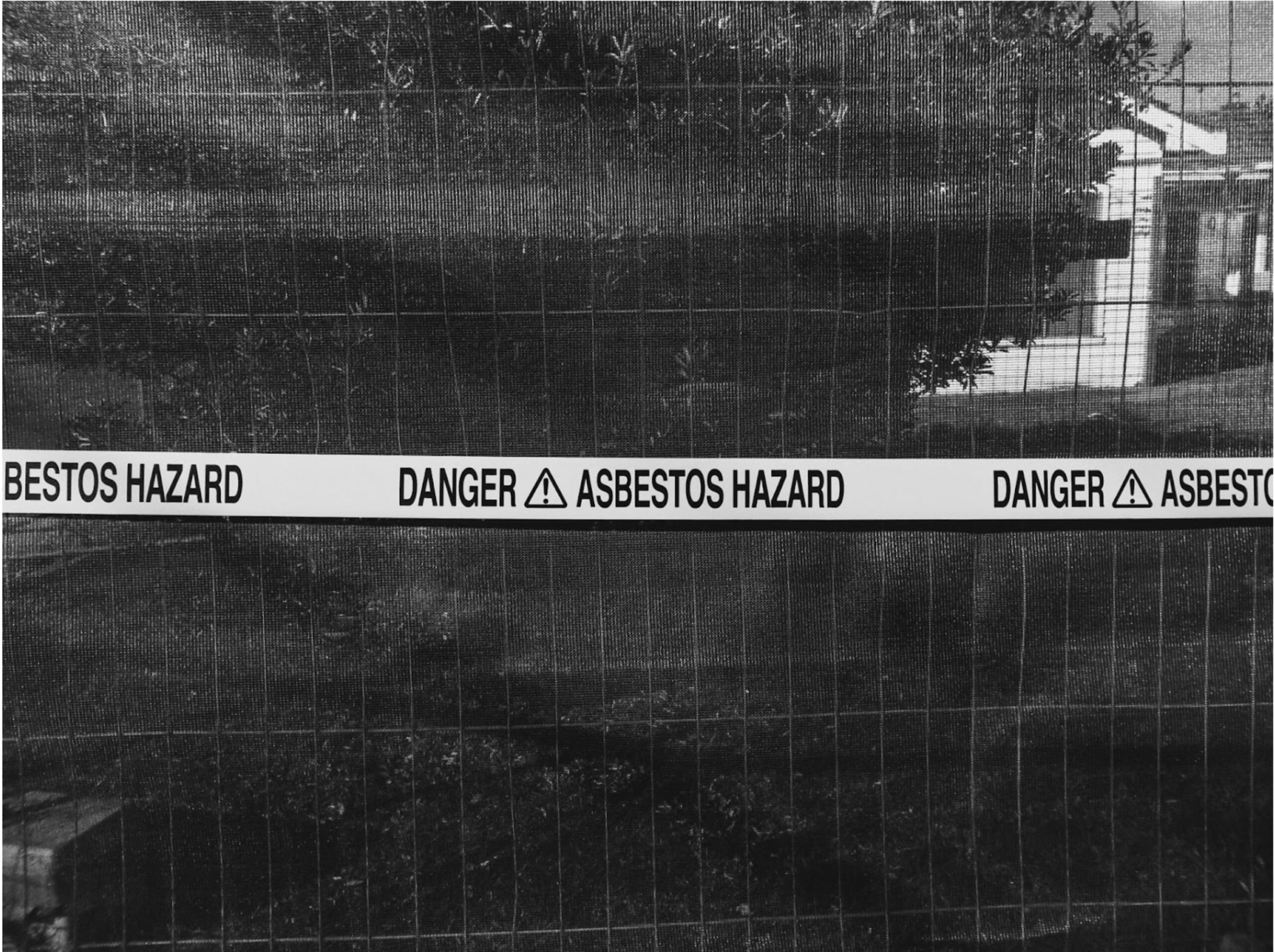
Before any work begins, the removal site is isolated. Hazard tape, signage, plastic sheeting and duct tape create a containment zone, often paired with negative air pressure units to prevent fibres from escaping into other areas. In A class or friable asbestos removals, additional measures, including air monitoring and clearance inspections by a third-party licenced asbestos assessor, are also necessary.
Step 3: Personal protective equipment
Workers wear full-body disposable suits, respirators, and gloves. This isn’t just for their safety—it ensures they don’t carry asbestos particles out of the work zone.
Step 4: Careful removal
Using wet methods (like spraying water to keep dust down) and specialised tools, the team removes the ACMs. Everything is double-bagged in thick 200 micron, labelled plastic for disposal.
Step 5: Cleanup and air monitoring
After removal, the area is meticulously cleaned with HEPA filters. Air quality tests confirm no fibres remain before the space is deemed safe again.
Step 6: Disposal
The asbestos waste is transported to a designated landfill equipped to handle hazardous materials, following strict guidelines.
The process can take anywhere from a day to a week, depending on the scale of the job. Costs vary too; small projects might run a few hundred dollars, while larger ones could climb into the thousands. It’s an investment, but one that protects your health, legal liability and property value.
Why asbestos exposure is a serious health risk
The stakes of asbestos exposure are high. Mesothelioma, a rare cancer tied almost exclusively to asbestos, has a grim prognosis; most cases aren’t diagnosed until it’s too late. Asbestosis and emphysema, chronic lung conditions, can leave people struggling to breathe for years and slowly suffocate to death. Even low-level exposure over time can cause problems, which is why experts recommend zero tolerance for asbestos in living spaces.
If you’re renovating or selling a property, asbestos removal also makes financial sense. Buyers today are smart; they’ll ask about asbestos history, and undisclosed issues could halt a sale contract or lead to legal headaches later.
Prevention and Alternatives
Once asbestos materials are removed, the focus shifts to keeping them out of your space for good. That starts with being more aware of the materials you’re using and how your property is maintained over time.
Modern alternatives such as steel roof sheeting, non-asbestos cement, fibreglass insulation and ceramic tiles are widely available and designed to meet current safety standards. In most cases, these materials not only remove the risk but also perform just as well, if not better, than their older counterparts.
Prevention also comes down to staying proactive. Regular maintenance checks can help identify any remaining asbestos-containing materials before they become an issue, particularly in older properties where some materials may have been left undisturbed. Wear and tear, weather exposure, or small renovation works can all increase the likelihood of fibres being released if asbestos is present.
It’s also important to approach any future work with caution. Drilling, sanding, cutting or removing materials without knowing what they contain is one of the most common ways asbestos exposure occurs. If there’s any uncertainty around a material’s history, it’s best to treat it as suspect until it has been properly assessed and tested.
Don’t take risks; use a licensed asbestos removalist
Asbestos removal isn’t glamorous, but it’s a vital part of managing older properties responsibly. It’s about more than compliance; it’s about peace of mind. Whether you’re a homeowner fixing up a fixer-upper or a landlord ensuring tenant safety, taking asbestos seriously can literally be a lifesaver.
So, if you suspect it’s in your walls or ceilings, don’t wait. Call in the licensed professionals, get it tested, and get peace of mind knowing you’ve stopped one of the biggest hidden dangers in construction history.